Jamestown · Chautauqua County, New York
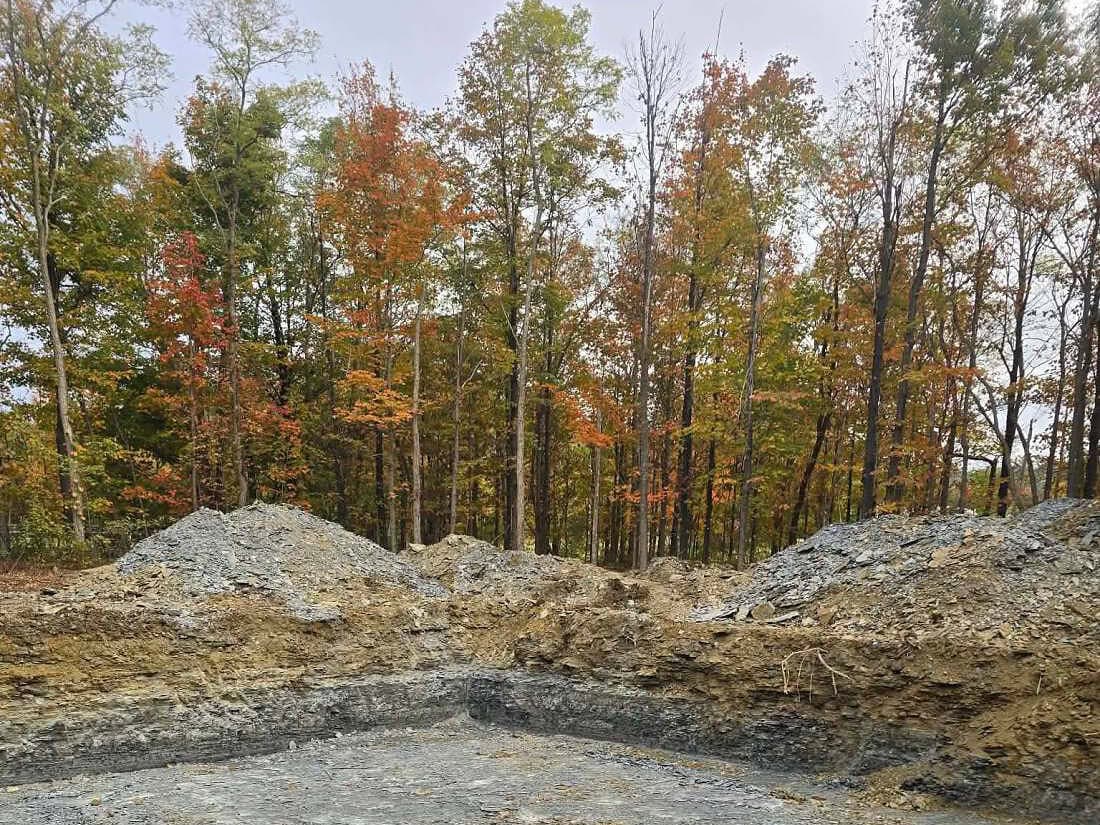
ExcavationDug right, set to grade, ready for concrete.
Footers, foundations, cut and fill and finish grade, in the clay and shale that sits under most of Chautauqua County. We walk it first, you get the number before a machine comes off the trailer, and rock and water are priced separately and told to you up front, not hidden inside it.
What it is
The hole and the grade, done once
Excavation is the ground work that comes before the concrete crew and after the lot is cleared. We dig the footers and the foundation to the depth and lines the plans call for, move dirt from where it is high to where it is low, and set the grade so the site drains away from what you are building instead of toward it.
What is included
- You get the price before we start.
- Footers and foundations dug to the lines and depth on the plans.
- Cut and fill: dirt moved from the high side to the low side so the site sits level.
- Grade set so water runs away from the building.
- Spoil piled where you want it or hauled off.
When you need it
- A house, garage, addition or barn is going in and the concrete crew needs a hole.
- The lot slopes and the building needs a level spot.
- Ground has to be shaped so it drains and can be seeded.
- The old lot was cleared and now needs to be brought to grade.
Two kinds of dirt work
Digging for a building, or shaping the ground
Most jobs are one or the other, and plenty are both on the same lot.
Footers and foundations
The hole for a basement, a crawl space or a slab, dug square to the plans with the walls cut clean so the forms go in without extra hand work. Around here that usually means going down through clay to shale, and shale is priced as rock and told to you up front.
Houses, garages, additions, barns
Cut, fill and grade
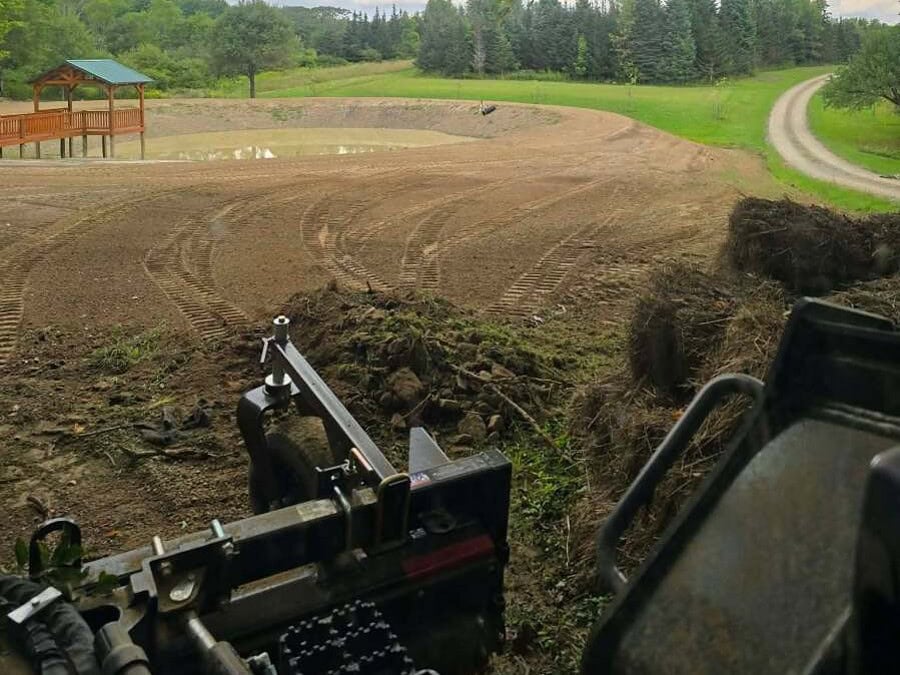
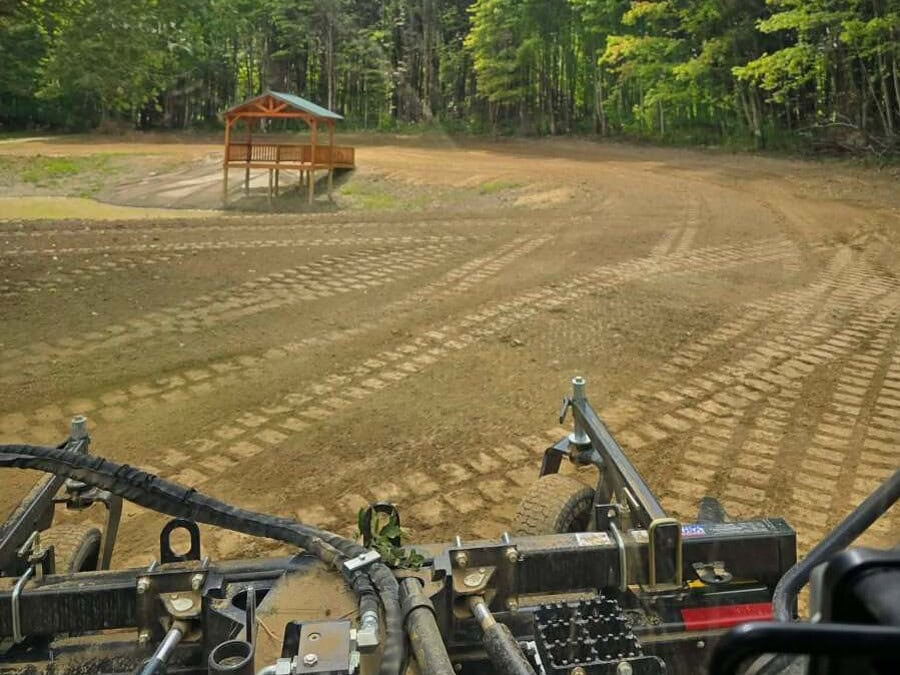
Moving dirt across a site to make a level pad, a slope that drains, or a raked surface ready for seed. This is dozer and excavator work together, and it is what turns a rough cleared lot into ground you can build or plant on.
Building pads, yards, fields, commercial grounds
If the trees and stumps are still on it, that is land clearing, and we do both on the same visit.
What it costs
What moves the number
Nobody can price a dig off a phone call, because the two things that change the number most are under the ground. Here is what we are looking at when we walk it.
Rock
Chautauqua County sits on shale, and on some lots it is a foot down. Digging rock is slower than digging dirt. It is priced as its own item and you are told before we start, not after we hit it.
Water
Clay holds water and a hole in clay fills up. If the site is wet or the water table is high, keeping the hole dry is its own line, and it is told to you up front the same as rock.
How deep and how big
A full basement is a lot more dirt than a crawl space or a slab. The plans tell us the depth and the footprint, and the size of the hole sets most of the machine time.
Where the dirt goes
Spread on site is cheapest. Piled for later backfill is normal. Hauled off takes truck time, and how far it goes matters.
Slope
A level lot is a dig. A sloped lot is a dig plus the cut and fill to make a pad, which is dozer time on top of the excavator.
How finished you want it
Rough grade so it drains is the standard. Raked and ready for seed, or shaped for a driveway or a lawn, is more time and we can do that too.
We come out and look at it before we give you a number, and the number comes before any machine comes off the trailer. The walk-through doesn’t cost anything.
Recent work
Dirt work around Chautauqua County
The machines that show up
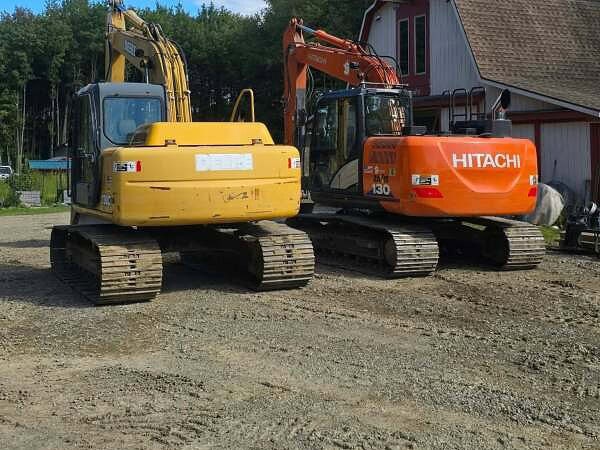
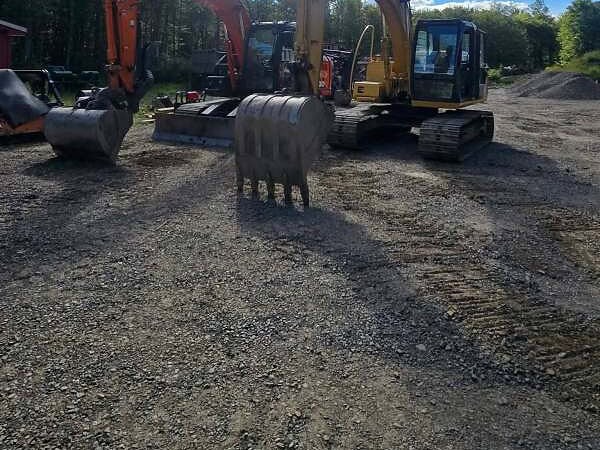
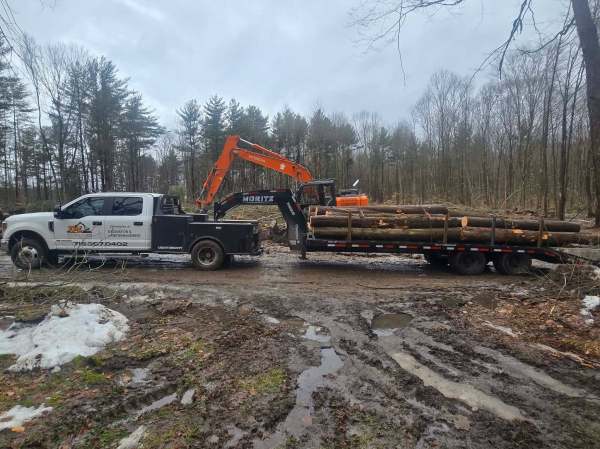
Excavators, dozer and track loaders, all ours. We haul them in on our own lowboy instead of waiting on somebody else’s schedule.
Questions
What people ask first
What happens if you hit rock?
Around here you usually do. Shale is priced as its own item and you are told about it before we start, so hitting it is not a surprise on the bill.
What if the hole fills with water?
Clay holds water, so it happens. If the site is wet when we walk it, keeping the hole dry gets priced as its own line up front, the same as rock.
Do you dig septic systems?
No. We dig footers, foundations and site grading. For a septic system you want a septic contractor, and the county health department keeps a list.
Who marks the utility lines?
The lines get marked before we dig. Call 811, which is Dig Safely New York, a few days ahead and they send the utilities out to mark. It is free and it is the law.
Can you dig in the winter?
Yes, and frozen ground carries the machines without rutting the yard. Frost on top slows the first foot or so, and a concrete crew has its own cold-weather limits, so we work it out with the schedule.
How far ahead do I need to book?
Book early. The schedule fills up a long way out. Tell us the date the concrete crew needs the hole and we’ll tell you straight whether we can make it.
Free on-site estimate
Tell us where it is and what’s going in
We’ll call to set a time to come walk it. The walk-through doesn’t cost anything, and you’ll know what it costs before any machine comes off the trailer. If you have plans, have them handy.
Busti, Lakewood, Ashville, Jamestown, Frewsburg, Panama, Falconer, Kennedy, Bemus Point, Randolph and across Chautauqua County. We cross into Warren County, Pennsylvania regularly.